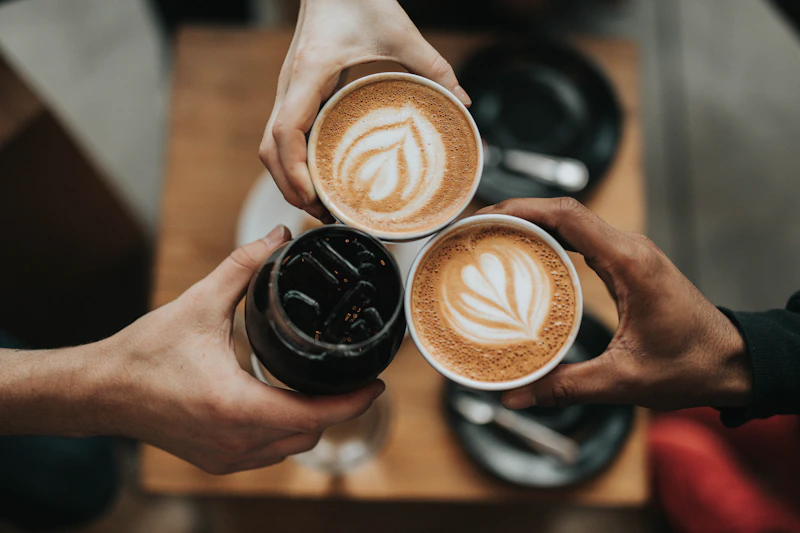
 1946
1946
The Silk of Hà Nội
Where milk was scarce, an egg became velvet.
Blend: No. 01 — Hanoian Silk
Read the storyA History Brewed · 1940 — Today
In Vietnam, every cup carries a story. From the rationed wartime roasts of the 1940s to the phin-filtered ritual of Sài Gòn’s sidewalks and the egg-coffee silk of Hà Nội — meet the blends, the recipes and the people who brewed them. Written for the American table.
Chapter 00 — Prologue
Coffee arrived in Vietnam in 1857 aboard French ships, planted first in Huế and later across the misted plateaus of Đà Lạt and the red basalt earth of Buôn Ma Thuột. But the country’s soul was forged later — when war, blockade and scarcity forced the Vietnamese to reinvent the cup itself.
Where rationing rationed away luxury, cooks stretched roasted beans with soy, chicory and corn. Where milk was scarce, a Hanoian bartender whisked egg yolks into silk. Where the war never stopped, a metal phin filter slowed everything down — five patient minutes for a bitter, sweet, impossible cup. That patience became the ritual that carried a nation through the 20th century.
“Coffee in Vietnam is not drunk — it is lived. One phin, one chair, one story at a time.”
Today Vietnam is the world’s second-largest coffee producer, yet most American coffee culture knows it only as ‘espresso’s darker cousin’. This site is our attempt to fix that — one story, one blend, one recipe at a time.

Chapter I — The Stories
Every blend below is anchored in a documented moment of Vietnamese history, wrapped in the voices of the people who brewed it. Choose a card to read the full story.
1946
Where milk was scarce, an egg became velvet.
Blend: No. 01 — Hanoian Silk
Read the story 1954
1954
Sài Gòn cooled the war into ice and condensed milk.
Blend: No. 02 — Saigon Noon
Read the story 1968
1968
Chicory, corn and courage in a rationed cup.
Blend: No. 03 — Guerre Blend
Read the story 1986
1986
A nation of growers wakes up to the world.
Blend: No. 04 — Buôn Ma Thuột
Read the story 2012
2012
The Delta taught Hà Nội to dream in white.
Blend: No. 05 — Delta Nights
Read the story Today
Today
Vietnamese coffee crosses the Pacific for good.
Blend: No. 06 — Diaspora
Read the storyChapter II — The Timeline
From a colony’s plantation to the world’s second-largest producer — the coffee decades of Việt Nam.
War and Japanese occupation strangle imports. Coffee becomes luxury; café owners stretch roasted beans with chicory, soybeans and roasted corn. A generation learns to make little taste like much.

In bomb-scarred Hà Nội, Mr. Nguyễn Giảng of the Café Giảng adapts a French cappuccino with what’s at hand — whipped egg yolk and condensed milk poured over dark robusta. Cà phê trứng enters the world.

The Geneva Accords split the country. In the south, sidewalk cafés multiply; cà phê sữa đá — dark robusta dripped into a glass of sweet condensed milk over ice — becomes the taste of the city. Even at war, the ritual never stops.

Economic renovation unlocks farms and markets. Production climbs from six thousand tonnes in 1975 toward two million by the new century. Buôn Ma Thuột and the Central Highlands become the robusta capital of the planet.

Vietnam passes the mark to become the world’s second-largest coffee exporter. On every street corner, the phin hisses and drips — 5 minutes of patience, 30 seconds of pleasure, one ice-filled glass.

Young roasters in Hà Nội and Sài Gòn source single-origin Đà Lạt arabica, revive heritage recipes, and dream up the coconut coffee that conquers both the street and the Instagram feed. Vietnamese coffee goes premium — at home first.

Vietnamese-owned roasters open from Little Saigon to Brooklyn. Cà phê sữa đá lands on US menus with the phin in the cup, and a new generation of American drinkers discovers what wartime patience already knew — this coffee was always built to last.

Chapter III — The Blends
Each blend is designed for the American home brewer — measured for the phin, the drip machine and the French press.
Era · Hà Nội 1946
Born of scarcity, perfected in silk.
80% Đà Lạt robusta · 20% Huế arabica
Dark, first crack passed — glossy, bittersweet
Chapter IV — The Recipes
Six authentic recipes, from wartime necessity to modern comfort — every measurement, every step, tested for the American kitchen.

The national drink — Sài Gòn, every hour of the day.
The signature drink of the south — dark robusta dripped slowly through a phin onto sweet condensed milk, then thrown over ice. Sweet, bitter, cold, and utterly addictive.
Pro tip: The first pour is a promise, the last drop is a farewell — let every drop fall.

The 1946 classic — a dessert and a coffee in one glass.
Whipped egg yolk folded with condensed milk until it holds soft peaks, floated over bitter robusta. Invented in 1946 when milk ran out in wartime Hà Nội — now a national treasure.
Pro tip: Eat the meringue with a tiny spoon first, then stir it in halfway through for two coffees in one.

Coconut milk coffee — the Delta’s gift to Hà Nội cafés.
Cold coffee blended with coconut milk and cream until frothy, poured over ice. Born of the Mekong Delta’s coconut groves, perfected in the café chains of Hà Nội — creamy, tropical, electric.
Pro tip: Freeze half the coconut milk into ice cubes so the drink never dilutes.

The north’s winter answer — silk over heat.
The older, calmer cousin of the iced version. In the northern cold season, Hanoians sip this slowly — dark coffee poured hot over condensed milk, the same ritual, no ice to rush it.
Pro tip: Warm the cup first — cold glass shocks both the milk and the mood.

Twelve hours of patience, one flawless glass.
The third-wave meeting of old and new: Vietnamese robusta steeped cold for 12 hours, then finished with condensed milk or coconut cream. Wartime patience, modern refrigeration.
Pro tip: Robusta shines cold — lower acidity, chocolate-forward, almost syrupy.

Scarcity brewed — the 1940s ration blend, revived.
When the 1940s blockade cut supplies, Hà Nội stretched its precious beans with chicory root, roasted corn and soy. The result was bitter, earthy, and beloved. Here it is, revived for modern shelves.
Pro tip: Chicory is sold in most US supermarkets — a cup of this is a history lesson you can drink.
Chapter V — The Ritual
Five minutes of patience — the whole country runs on this clock.
Screw the inner plate flush, then loosen half a turn for flow.
15 g medium-fine robusta; shake level, don’t pack.
Turn gently until it meets resistance — a light, even bed.
15 ml of water, 30 seconds. Watch the grounds swell.
Top up the phin, cover, and wait 4–5 minutes. Do not rush.
Stir the condensed milk into ribbons, pour, serve.
Set your phin’s patience. Traditional drip: 4–5 minutes.
Waiting for your water…
Epilogue
The next time you taste cà phê sữa đá, remember: you are drinking 1946’s scarcity, 1954’s city of cafés, 1986’s reawakening, and 2026’s crossing of the Pacific — in a single, patient, perfect cup.